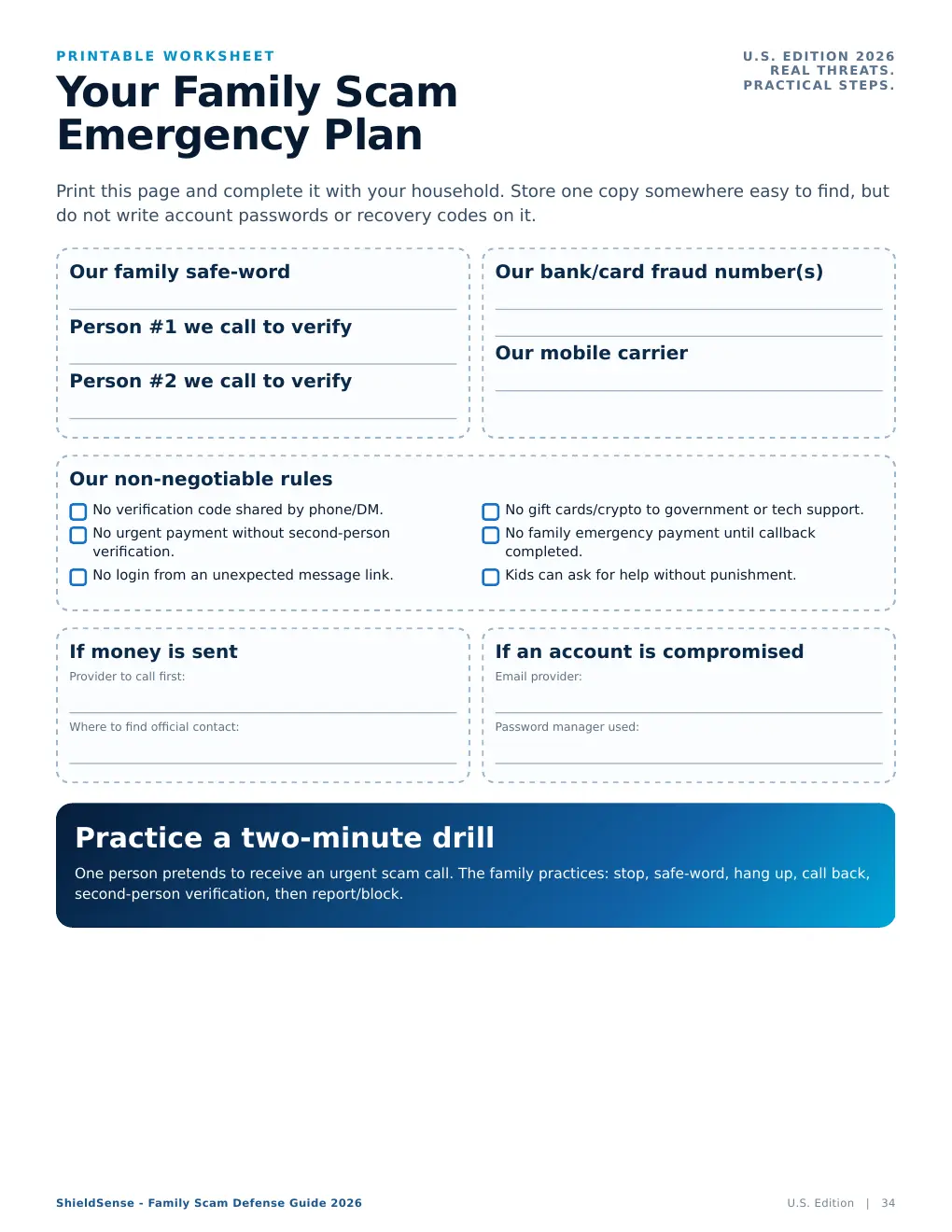
Protect older relatives by agreeing that urgent money requests always require a callback, saving verified family and institution numbers, limiting transaction alerts to trusted helpers with consent, and discussing scams without blame. A clear routine works better than telling someone to ‘be more careful.’
01
Use a rule that removes the pressure
A simple household rule—no money decisions on incoming calls—gives a person permission to pause without having to decide whether the caller sounds legitimate.
Practise the exact response together: ‘I will call the organization or family member back on the number I already have.’ This works for bank, government, utility, tech-support and grandchild-emergency impersonation attempts.
02
Add safeguards with consent
- Save verified contacts with clear labels
- Turn on bank and card transaction alerts
- Set lower transfer limits when appropriate
- Use a password manager and stronger sign-in protection
- Name a trusted contact for unusual transactions where the institution supports it
- Review privacy settings that expose relatives, travel or routines
03
Respond without shame
People hide mistakes when they expect ridicule. Stay calm, focus on the next protective action and remind the person that sophisticated scams are designed to create fear and urgency.
If money or credentials were shared, contact the provider immediately, secure email and financial accounts, preserve evidence and use the appropriate official reporting channel.
Frequently asked questions
Questions families ask.
How do I discuss scams without sounding patronizing?
Make the protocol a rule for the whole family, including yourself. Focus on how tactics have changed and practise the same callback routine together.
What payment requests are especially concerning?
Treat gift cards, cryptocurrency, cash couriers, wire transfers and instructions to move money for ‘safekeeping’ as major warning signs—especially when paired with secrecy or threats.
Should I take over a parent’s accounts?
Not by default. Start with consent-based alerts, verified contacts and transaction limits. For legal authority or capacity concerns, seek qualified professional guidance appropriate to your location.
This educational guide is checked against official U.S. consumer-protection and cybersecurity guidance. If money, identity information or account access may be at risk, contact the relevant institution through its official app, statement or independently typed website.