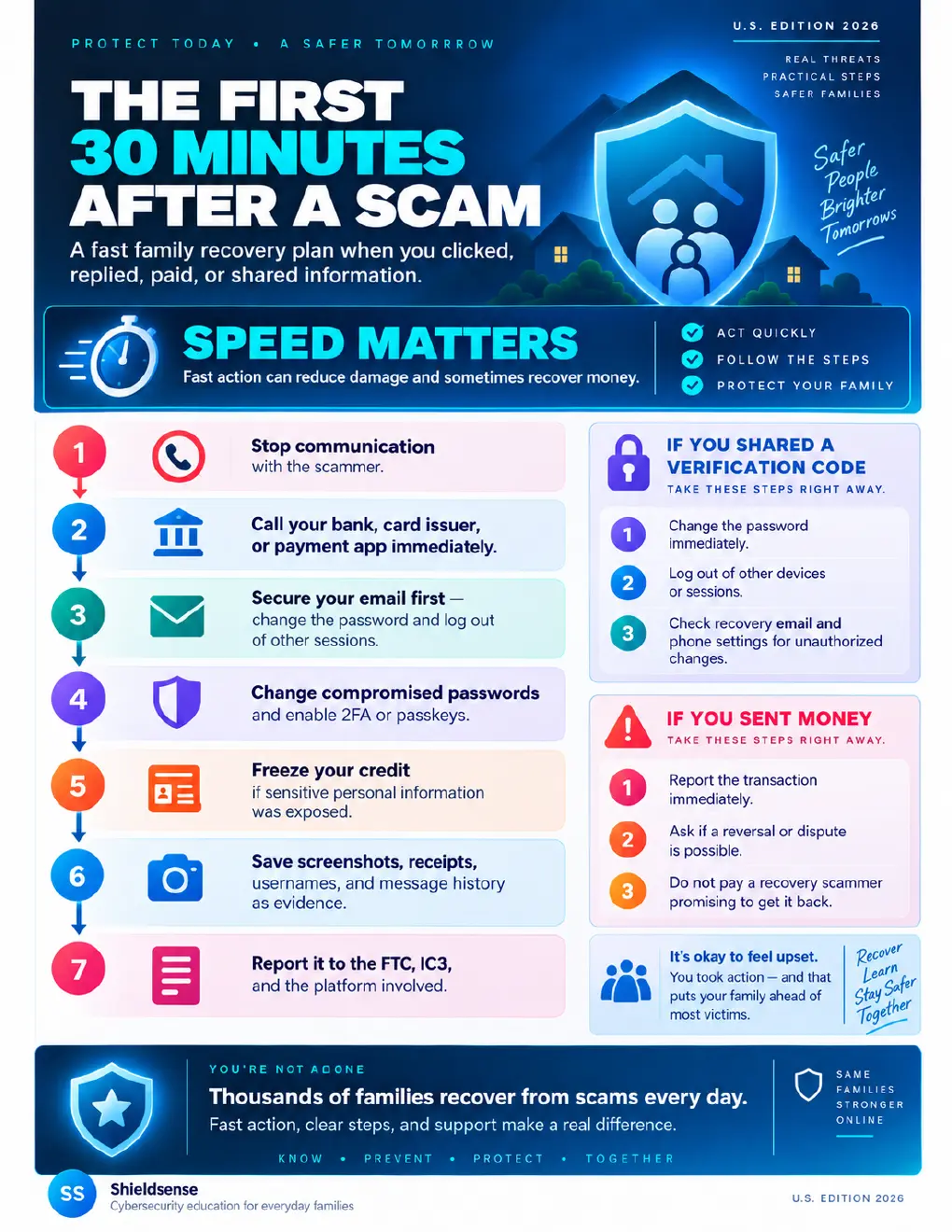
After an online scam, stop all contact, call the relevant bank or payment provider using its official number, secure the affected email account, preserve screenshots and transaction details, and report the incident. Act quickly, but do not let a follow-up ‘recovery’ service pressure you into paying again.
01
First: stop the loss from growing
- End contact with the suspected scammer
- Call the bank, card issuer or payment service from its official app, statement or website
- Ask whether the transfer can be recalled, frozen or disputed
- If cryptocurrency was sent, contact the exchange immediately and save the transaction ID
- Do not pay anyone who promises guaranteed recovery
02
Next: secure the account that controls the rest
Email is often the recovery key for banking, shopping and social accounts. From a trusted device, change the email password, sign out unfamiliar sessions and turn on multi-factor authentication.
Then secure any account where the same or a similar password was used. If a phone number may have been hijacked, contact the mobile carrier through its official support channel.
03
Preserve evidence and report
- 01Capture
Save messages, profile names, phone numbers, receipts, wallet addresses, URLs and timestamps.
- 02Write
Record what happened while the sequence is fresh, including what information or access was shared.
- 03Report
Use ReportFraud.ftc.gov for fraud, IdentityTheft.gov for identity theft and IC3.gov for internet-enabled crime.
- 04Monitor
Watch financial and credit activity and follow the institution’s instructions for replacement cards or account numbers.
Frequently asked questions
Questions families ask.
Can a scam payment always be reversed?
No. Recovery depends on the payment method, timing and provider. Contact the provider immediately, explain that the transaction involved fraud and ask which protective options remain.
Should I delete the scam messages?
Not yet. Preserve screenshots, headers, receipts, URLs and account identifiers before blocking the sender. Those records may help a provider or investigator.
Is a paid recovery company safe?
Be cautious. Criminals often target victims again with guaranteed-recovery claims. Never pay upfront based on pressure or an unsolicited contact; verify any organization independently.
This educational guide is checked against official U.S. consumer-protection and cybersecurity guidance. If money, identity information or account access may be at risk, contact the relevant institution through its official app, statement or independently typed website.